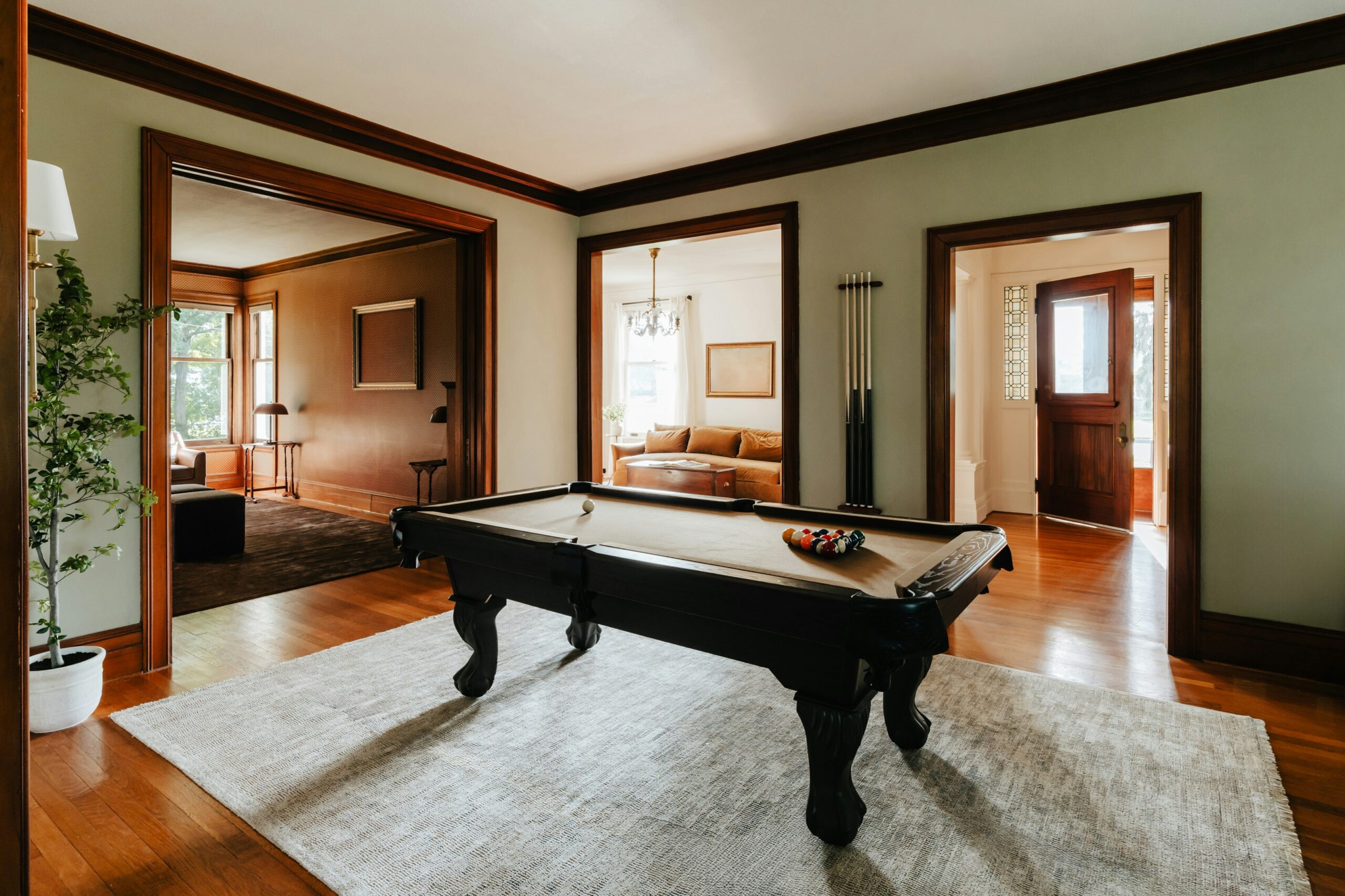
Creating a home billiards room is an opportunity to blend entertainment with thoughtful interior design. Rather than treating it as just another game space, you can transform it into a refined area that encourages relaxation and social interaction. Moreover, when every detail is planned carefully, the room supports better gameplay and long-term enjoyment. From layout decisions to finishing touches, each element plays a role in shaping the overall experience. This guide explains how to build a billiards room that feels balanced, inviting, and purpose-built.
Determining the Best Room Location
To begin, selecting the correct location in your home sets the tone for everything else. A billiards room should ideally be placed in a low-traffic area where players can focus without distractions. Basements, bonus rooms, or converted garages often work well because they offer privacy and enough square footage. Therefore, choosing a quiet and spacious location improves both comfort and concentration.
At the same time, accessibility matters. The room should be easy for guests to find and enter without disrupting the rest of the house. Additionally, considering proximity to bathrooms or refreshment areas makes hosting gatherings more convenient. By balancing privacy and accessibility, you create a space that feels intentional and welcoming.
Measuring Space and Clearance
Before purchasing any equipment, accurate measurements are essential. A billiards table requires more than just floor space; you must also allow room for full cue strokes. Generally, at least five feet of clearance on all sides of the table is recommended. As a result, measuring carefully helps prevent awkward layouts and restricted movement.
Equally important is ceiling height. Low ceilings can interfere with cueing and lighting placement, which negatively affects gameplay. Furthermore, adequate vertical space allows for proper light fixtures and improved airflow. When clearance is planned correctly, the room feels open and comfortable rather than cramped.
Selecting the Ideal Billiards Table
The table is the centerpiece of your billiards room, so choosing the right one is critical. Slate tables are widely considered the best option because they provide consistent ball roll and long-lasting durability. In contrast, non-slate tables may save money initially but often sacrifice performance and lifespan. Therefore, investing in quality pays off over time.
Additionally, table size should match both your room dimensions and playing style. Seven- or eight-foot tables are popular for home use because they balance challenge and space efficiency. While nine-foot tables look impressive, they require larger rooms to function properly. Matching size to space ensures the table enhances the room rather than overpowering it.
Understanding Cloth and Table Finishes
Beyond the table structure, the cloth and finish significantly influence gameplay and appearance. Worsted cloth offers faster play and a sleek look, making it a favorite among experienced players. On the other hand, traditional felt slows the game slightly and is more forgiving for beginners. Consequently, your skill level and preferences should guide your decision.
Likewise, table finishes affect the room’s visual harmony. Wood stains, metal accents, or modern finishes can complement your décor style. Choosing a finish that matches flooring and furniture creates a cohesive look. This attention to detail elevates the room from functional to polished.
Designing Proper Lighting
Lighting is one of the most important yet overlooked aspects of a billiards room. The primary goal is to illuminate the table evenly without shadows or glare. Hanging a dedicated billiard light centered above the table achieves this effect. Typically, placing the fixture 30 to 36 inches above the playing surface works best.
In addition, ambient lighting enhances the room’s atmosphere. Wall sconces or recessed lights provide soft illumination without distracting players. Installing dimmers allows you to adjust brightness based on the occasion. As a result, lighting becomes both practical and adaptable.
Choosing the Right Flooring
Flooring impacts comfort, noise levels, and overall aesthetics. Carpet tiles are a popular choice because they absorb sound and provide cushioning during long games. They also reduce the risk of damage if cues or balls are dropped. However, some homeowners prefer the clean look of hardwood or laminate flooring.
To balance style and function, area rugs can be added strategically. Rugs placed near seating areas soften sound while preserving the elegance of hard floors. Ultimately, flooring should support gameplay while fitting seamlessly with your home’s design.
Wall Colors and Protection
Wall color influences mood and focus within the billiards room. Neutral tones such as gray, beige, or soft green create a calm environment that keeps attention on the table. Darker colors, meanwhile, evoke a classic billiards hall feel and add visual depth. Therefore, color choice should align with the atmosphere you want to create.
At the same time, wall protection is essential. Cue tips can accidentally strike walls during play, leaving marks or dents. Installing framed artwork, decorative panels, or padded sections protects surfaces while adding character. This approach combines practicality with style.
Organizing Storage Efficiently
A well-organized billiards room always feels more professional. Cue racks keep cues straight and accessible, while wall-mounted options save valuable floor space. Storage cabinets or shelves can hold balls, chalk, and racks neatly. As a result, clutter stays out of sight.
Proper storage also protects your investment. Cues stored correctly are less likely to warp, and accessories remain in good condition. By prioritizing organization, you maintain a clean and polished appearance that enhances the overall experience.
Controlling Temperature and Air Quality
Climate control is often overlooked but plays a vital role in comfort and equipment preservation. Excess humidity can damage cloth and wood, while extreme dryness may cause cracking. Therefore, maintaining stable temperature and humidity levels is essential.
Using dehumidifiers, ceiling fans, or quiet ventilation systems helps regulate conditions. At the same time, proper airflow keeps the room comfortable during extended play sessions. These measures protect both players and equipment year-round.
Adding Entertainment and Technology
While billiards is the main attraction, additional features enhance versatility. Mounting a television allows you to watch sports or instructional content during games. Similarly, a discreet sound system adds ambiance without overwhelming the space.
However, placement matters. Screens and speakers should not distract players or interfere with lighting. Integrating technology thoughtfully ensures it complements rather than competes with the game.
Keeping the Room in Top Condition
Regular maintenance keeps your billiards room looking and playing its best. Brushing the cloth removes chalk dust, while cleaning balls prevents residue buildup. These small habits preserve table performance.
Inspecting cues, cushions, and lighting periodically helps catch issues early. Addressing minor problems prevents costly repairs later. Consistent upkeep protects your investment and extends the life of your setup.
Bringing the Vision to Life
Designing a home billiards room requires attention to detail, but the reward is a space that offers lasting enjoyment. Each choice, from layout to décor, contributes to how the room feels and functions. Moreover, thoughtful planning ensures the room supports both serious play and casual gatherings.
When all elements work together, your billiards room becomes more than a game area. It becomes a destination for connection, relaxation, and memorable moments. By following these principles, you can create a stylish and functional billiards room that enhances your home and your love for the game.