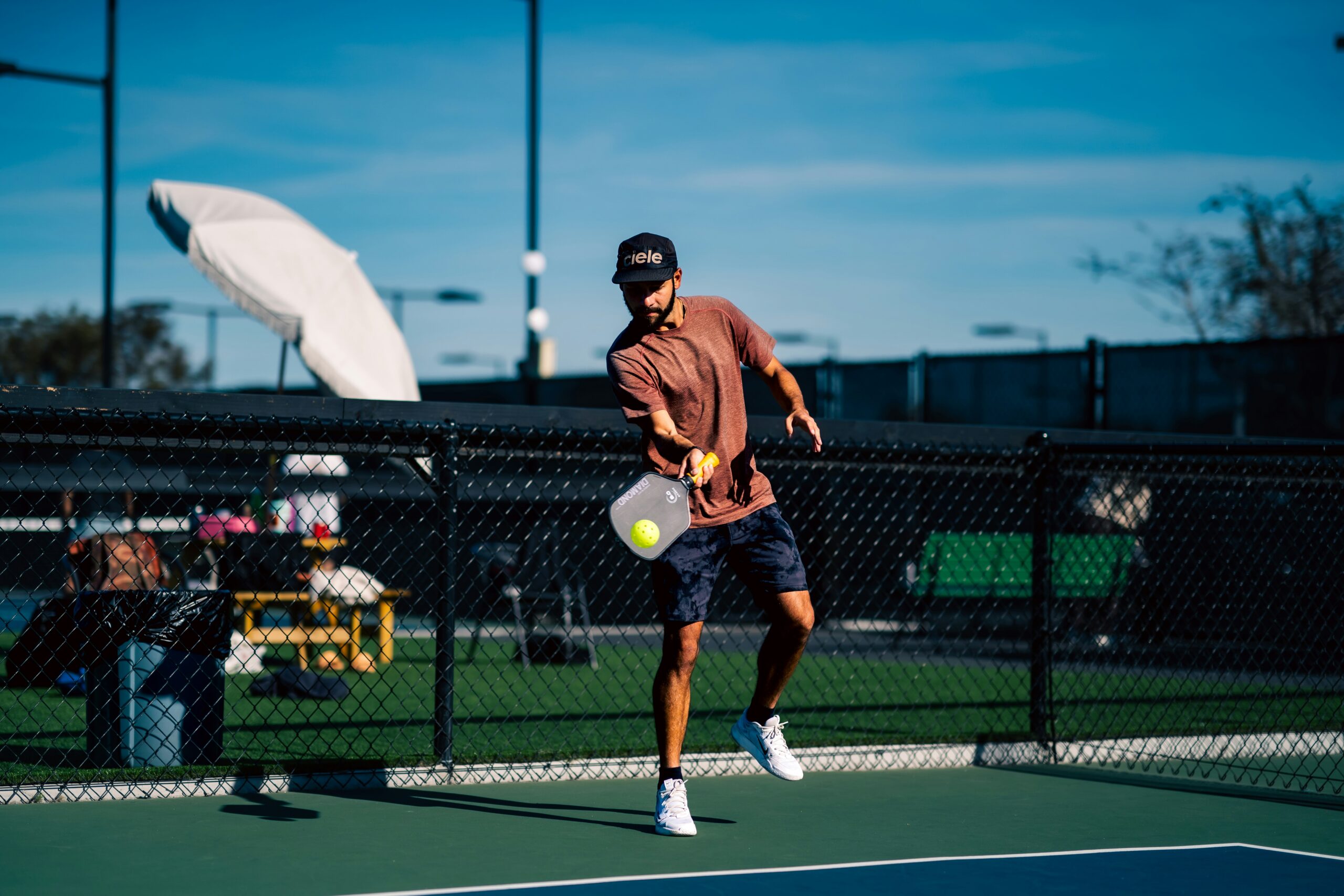
Pickleball looks simple when you first step onto the court. However, improving your game requires more than hitting the ball back and forth. Strong players combine good technique, smart movement, patience, and consistent practice. Learning how to improve your pickleball game starts with understanding these basic areas. Small changes in your approach can quickly make your shots more accurate and controlled.
You do not need advanced athletic skills to become a better player. Instead, focus on building reliable habits that work during every match. Practice your serve, improve your footwork, and learn when to play aggressively. You should also recognize when patience gives you an advantage. As your skills improve, you can make better decisions under pressure and enjoy more competitive games.
Build a Reliable and Consistent Serve
Your serve starts every point, so it deserves regular attention. A powerful serve can help, but consistency matters much more. Focus on placing the ball deep in your opponent’s service area. A deep serve can push your opponent toward the baseline. This gives you more time to prepare for the return. Keep your serving motion smooth and controlled instead of trying to create maximum power.
Practice serving toward different areas of the court. For example, aim near the center line, sideline, and back corners. Changing your placement makes your serve less predictable. You should also develop a simple routine before every serve. A consistent routine can help you stay relaxed during important points. With regular pickleball practice, your serve can become a dependable part of your game.
Improve Your Footwork and Court Position
Good footwork helps you reach the ball while maintaining proper balance. Many beginners focus only on their paddle and forget about their feet. However, poor positioning often causes missed shots. Stay on the balls of your feet and use small steps when adjusting your position. Avoid crossing your feet when moving sideways because this can reduce your balance and slow your recovery.
Court position also plays an important role in effective pickleball strategy. After returning the serve, move forward when the situation allows it. Getting closer to the non-volley zone can create better attacking opportunities. However, avoid rushing forward without control. Move together with your partner during doubles games. Proper positioning reduces open spaces and makes it harder for opponents to find easy targets.
Develop Better Control With the Dink
The dink is a soft shot that lands in or near your opponent’s non-volley zone. Although it looks simple, this shot requires patience and control. Keep your grip relaxed and guide the ball over the net. Avoid making a large backswing because excessive movement makes the shot harder to control. Your goal is to keep the ball low and force your opponent to hit upward.
Regular dink practice can greatly improve your pickleball game. Practice hitting straight ahead and across the court. Crosscourt dinks give you more space because the ball travels farther over the net. During matches, avoid attacking every ball immediately. Sometimes several soft exchanges are necessary before an attacking opportunity appears. Patient players often create better chances by waiting for an opponent to make a mistake.
Master Your Third Shot
The third shot is important because it can help the serving team move toward the net. After the serve and return, you often need to hit from deeper in the court. A controlled drop shot can land softly near your opponents and reduce their attacking options. Instead of trying to hit a winner from the baseline, focus on creating enough time to move forward safely.
Learning the third-shot drop takes practice because distance, height, and paddle control must work together. This physical activity also improves coordination and court movement. Start from the middle of the court, then move toward the baseline as your accuracy improves. A reliable third-shot drop can strengthen your pickleball strategy, improve shot placement, and help you control more points.
Make Smarter Shot Choices During Matches
Improving your technique will not help much if you constantly choose risky shots. Strong pickleball players understand when to attack and when to remain patient. Avoid trying to hit winners from difficult positions. Instead, return challenging balls safely and wait for a better opportunity. Target open spaces instead of always hitting directly at your opponent. Smart placement can often be more effective than raw power.
Pay attention to your opponent’s position and movement. If someone moves too far toward one side, place the ball into the open space. You can also target an opponent’s weaker side after identifying it. During doubles matches, communicate with your partner to prevent confusion. Better decision-making can reduce unnecessary mistakes and help you maintain control during longer rallies.
Improve Your Paddle Control
Paddle control affects almost every part of your pickleball game. Holding the paddle too tightly can make your shots stiff and difficult to control. Use a comfortable grip that allows your wrist and arm to remain relaxed. Short, controlled swings usually work better than large movements. Keeping your paddle ready in front of your body also helps you respond quickly during fast exchanges.
Practice controlling both the speed and direction of the ball. Try hitting several shots while maintaining the same pace. Then practice changing the pace without losing accuracy. You should also work on forehand and backhand shots because opponents will test both sides. Better paddle control can improve your confidence while helping you handle different situations during competitive matches.
Reduce Unforced Errors
Many pickleball matches are decided by mistakes rather than impressive winning shots. Hitting the ball into the net or outside the court gives away easy points. Therefore, focus on keeping the ball in play. Give yourself a reasonable margin over the net instead of aiming too close to it. When you feel pressured, choose a controlled shot instead of attempting something difficult.
Pay attention to patterns in your mistakes. You may struggle with backhand returns, rushed volleys, or shots near the sideline. Identifying these problems gives your practice sessions a clear purpose. Work on one weakness at a time instead of trying to fix everything at once. Reducing simple errors can quickly improve your results, even before you develop more advanced pickleball skills.
Practice With a Clear Purpose
Simply playing more games does not always produce faster improvement. Purposeful practice focuses on specific skills. Spend time practicing serves, returns, dinks, drops, and volleys separately. Repetition helps your body become comfortable with each movement. Then use those skills during practice matches. This approach makes it easier to recognize which techniques remain strong when you face pressure.
You can also practice with players who use different styles. Some rely on speed, while others prefer patient rallies. Facing different approaches helps you build stronger pickleball skills, improve your pickleball strategy, and make smarter decisions under pressure. Most importantly, stay consistent with your training and focus on steady progress. Learning how to improve your pickleball game takes patience, purposeful pickleball practice, and strong fundamentals. Better paddle control, smarter shot selection, and confident court movement can support long-term success and help you become a more complete pickleball player.